Table of Contents
ToggleBlack and grey bedrooms are no longer just a trend, they’re a design choice that delivers sophistication, calm, and genuine style. If you’ve been scrolling through dark bedroom inspiration and wondering how to pull off the look in your own space, you’re not alone. This color combination works because it’s naturally restful, hides dust better than lighter palettes, and provides an excellent backdrop for both minimalist and layered décor approaches. Whether you’re drawn to the moodiness of deep charcoal or prefer a softer greyscale, black and grey bedroom ideas can be tailored to fit your space, budget, and lifestyle. This guide walks you through practical strategies for making the look work, from wall preparation and paint selection to lighting and furnishing choices that keep the space from feeling like a cave.
Key Takeaways
- Black and grey bedroom ideas create a naturally calming environment scientifically linked to better sleep while being more forgiving than light palettes—dark walls hide dust and imperfections without constant cleaning.
- An accent wall behind the bed is the most impactful feature; properly prepare surfaces, use primer, and test paint samples in your room’s natural lighting before committing to the full project.
- Prevent a flat, cold appearance by layering at least three different textures—combine materials like linen, wool, concrete, brushed metal, and natural wood to add visual depth and warmth to your black and grey design.
- Strategic layered lighting is non-negotiable in dark bedrooms: use dimmable wall sconces, warm-toned task lighting at 2700K, and accent lighting with LED strips to separate the space and maintain visual interest.
- Balance furniture and décor by mixing minimalist pieces with warm wood tones and introducing one unexpected color accent through artwork or accessories to prevent the room from feeling monotone or institutional.
Why Black and Grey Works for Bedroom Design
Black and grey create a naturally calming environment that’s scientifically linked to better sleep. Unlike bright whites or bold jewel tones, dark, muted hues don’t overstimulate the eyes when you’re winding down for the night. They also provide excellent contrast for accent lighting, which we’ll cover in detail later.
From a practical standpoint, these colors are forgiving. Dark walls don’t show dust, pet hair, or minor wall imperfections the way light walls do. You’ll spend less time cleaning and more time enjoying your space. The palette is also endlessly flexible, black and grey serve as a neutral foundation that works with industrial metal accents, warm wood tones, soft textiles, or even pops of color in artwork and décor.
Designers favor this combination because it reads as intentional and sophisticated. A black and grey bedroom signals that you’ve made deliberate choices rather than defaulting to beige. This matters if you’re considering future resale value or simply want a space that feels curated. The neutrality also means trends in bedding, lighting, and accessories won’t clash, you can refresh your look by swapping textiles without repainting.
Creating a Sophisticated Dark Accent Wall
An accent wall is often the most impactful black or grey feature in a bedroom, and the good news is that it’s a straightforward DIY project if you’re comfortable with basic painting. The trick is choosing the right wall and preparing properly.
Start by identifying your focal point, usually the wall behind your bed. This wall draws the eye naturally and benefits most from color depth. Measure the wall’s dimensions carefully: you’ll need roughly one gallon of paint per 350–400 square feet of coverage with standard latex paint. Before buying, grab paint samples from major retailers and test them on the wall in different lighting conditions. What looks navy blue in the store might read pure black in your bedroom’s natural light.
Prep work is non-negotiable. Clear the room, lay down drop cloths, and use painter’s tape along the ceiling, baseboards, and adjacent walls. Fill any holes with spackling compound, sand smooth once dry, and wipe down dust with a damp cloth. Apply a primer, especially if you’re painting over a light color, then two coats of your chosen paint, allowing adequate drying time between coats per the manufacturer’s instructions. Use a quality 2–3 inch brush for edges and a roller for the field to avoid brush marks. A coat of primer not only improves coverage but also ensures your black or grey reads true rather than appearing translucent.
If you want to involve professional-level design inspiration, dark bedroom ideas from established designers demonstrate how accent walls anchor the entire room’s aesthetic. Popular sheen options include eggshell or satin for bedrooms, they hide imperfections better than flat finishes while being easier to clean than glossy sheens.
Layering Textures and Materials
A monochromatic black and grey palette can feel flat without intentional texture. This is where layering saves the design and prevents your bedroom from reading as cold or institutional.
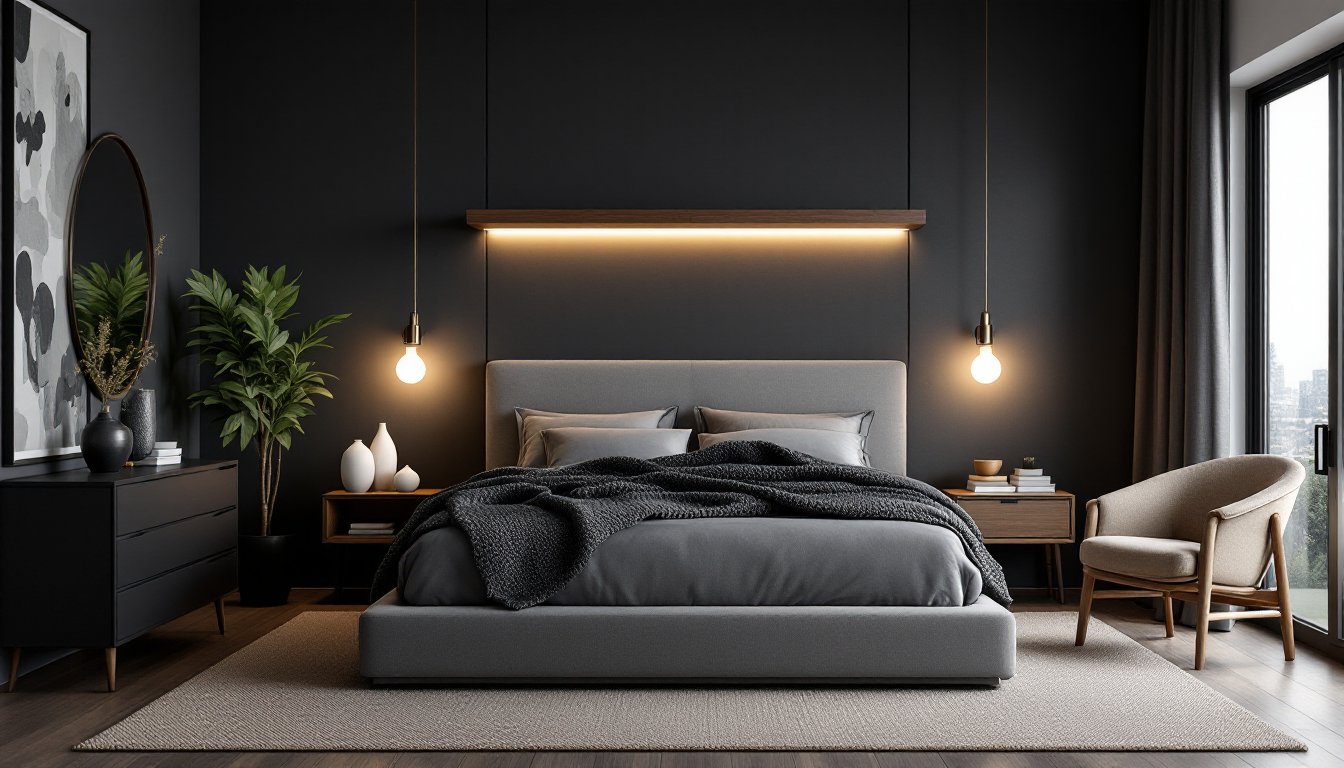
Think in terms of visual weight and tactile interest. A black accent wall becomes more inviting when paired with soft grey linen bedding, a charcoal wool area rug, and perhaps a chunky knit throw blanket. The shift between matte, silky, and fuzzy surfaces creates depth that solid color alone cannot achieve. This is also where material choices matter enormously.
Combining Fabrics and Finishes
Select at least three different textures for your black and grey scheme. For bedding, consider a combination: a charcoal cotton duvet paired with linen pillowcases in a lighter grey, then layer a chunky knit or faux fur throw across the foot of the bed. This mix of weights and finishes is what makes the space feel intentional rather than accidentally monochromatic.
For other elements, incorporate brushed metal accents (bedside lamps, curtain rods), matte black furniture hardware, and perhaps a smooth concrete or glass surface element like a nightstand or wall shelf. Woven window treatments, linen Roman shades or blackout curtains in charcoal, add both function and texture. Wood elements shouldn’t be overlooked: a black walnut or dark oak dresser introduces warmth and organic texture that metal and fabric alone cannot provide.
Area rugs are crucial. A jute or sisal rug in natural tan layered under a grey wool runner adds visual interest and prevents the room from feeling too heavy. Natural fibers break up the black and grey and introduce subtle warmth. Avoid matching every element perfectly, intentional variation in shades (charcoal, graphite, slate, dove grey) and finishes (matte, satin, fuzzy) prevents the “one color everywhere” trap that makes dark rooms feel claustrophobic.
Lighting Strategies for Dark Bedrooms
This is the non-negotiable element that separates a moody bedroom from a depressing cave. Dark walls absorb light, so you need a deliberate lighting plan that layers illumination for different times of day and activities.
Start with ambient lighting. A central ceiling fixture is baseline, but it’s not enough alone. Add dimmable wall sconces on either side of the bed, these provide gentle light for reading and create visual interest without relying solely on overhead fixtures. Position them 12–18 inches above the nightstand height for optimal reading comfort. Install dimmer switches on all controllable lights: this allows you to adjust mood and brightness based on time of day.
Task lighting comes next. Bedside table lamps with warm color temperature bulbs (2700K is ideal for bedrooms) provide focused light where you need it. Choose lamps with solid bases that won’t topple easily: brushed nickel, matte black, or concrete finishes complement your dark palette. Avoid bare bulbs or harsh white light (5000K+), which feels institutional and interferes with sleep hormone production.
Accent lighting is the secret weapon. Small LED strip lights installed behind a floating shelf, beneath the bed frame, or along a headboard accent add depth and prevent the room from feeling flat. These don’t need to be bright, just enough to create visual separation and layering. Finally, consider the color temperature of every bulb. Warm white (2700K) reads as cozy: cool white (4000K+) feels clinical. Stick with warm tones throughout a black and grey bedroom.
Window treatments also affect light. Blackout curtains in charcoal or black provide light control and insulation, while sheer liners allow filtered daytime light. The combination prevents the room from becoming a cave during daylight hours while maintaining light control at night.
Furniture and Decor Selections
Furniture choice makes or breaks a black and grey bedroom. Overly modern minimalism can feel cold: too much upholstery in dark fabrics can overwhelm. Strike balance by mixing styles and materials.
Your bed is the largest furniture piece and visual anchor. An upholstered headboard in charcoal grey or black linen creates a strong focal point, especially against a dark accent wall. If headboards aren’t your preference, a simple platform bed in dark wood or black metal works equally well, pair it with high-quality bedding to keep visual interest. Nightstands should be functional: small wood tables, sleek metal designs, or concrete-look pieces all work. Avoid spindly legs that disappear visually: substantial pieces ground the space.
For additional furniture, dressers and storage should follow the palette. A matte black or dark grey dresser provides storage without breaking the color scheme. A wooden chest in dark stain adds warmth and texture. Keep the room from feeling monotone by introducing one furniture piece in natural wood or neutral upholstery, a bench at the foot of the bed in tan linen or a wooden accent chair creates visual relief.
Decor and wall art are where your personality enters. Large-scale artwork with grey, white, and black tones works naturally, but consider introducing one unexpected color element, a framed print with a pop of deep blue, forest green, or even muted gold adds sophistication without clashing. Mirrors in black or brushed metal frames reflect light and make the room feel larger. A gallery wall arrangement of black frames with a mix of photography, abstract prints, and textured elements (woven wall hangings, macramé) adds dimension.
Accessories should be intentional rather than decorative for decoration’s sake. Dark ceramic vases, stacked books, potted plants in ceramic or concrete planters, and a wooden or metal tray on the dresser keep the look curated. If you’re seeking broader design direction beyond your own space, interior design galleries showcase, offering real examples of successful black and grey room designs. Avoid the temptation to fill every surface: negative space in a dark room is your friend, preventing the space from feeling cluttered or heavy.
Conclusion
A black and grey bedroom doesn’t have to feel cold or institutional, it’s actually one of the most versatile palettes for creating a retreat that feels both sophisticated and genuinely restful. Success comes down to three core elements: intentional accent walls, layered textures and materials, and strategic lighting that prevents dark walls from reading as oppressive. Start with your focal wall, add depth through varied finishes and fabrics, and invest in layered lighting that you can adjust. The result is a space that’s uniquely yours, one that invites genuine relaxation and reflects your design vision.