Table of Contents
ToggleDark purple is having a moment in bedroom design, and for good reason. It’s bold without being aggressive, luxurious without demanding marble and gold accents, and genuinely relaxing when you get the shade right. Whether you’re drawn to deep plum, rich eggplant, or sophisticated mauve undertones, dark purple creates an intimate sanctuary that feels both modern and timeless. This guide walks you through selecting the right shade, tackling the walls, choosing furniture that works with moody tones, lighting your space so it doesn’t feel like a cave, and adding those finishing touches that tie everything together.
Key Takeaways
- Dark purple bedroom ideas create a calming, sophisticated sanctuary by balancing boldness with warmth, making it more inviting than other moody colors like charcoal or navy.
- Test at least three paint samples of dark purple on your walls over several days in different lighting conditions to determine whether red-based purples (warmer) or blue-based purples (cooler) work best for your space.
- Properly prepare walls by cleaning thoroughly and using quality paint with two coats and a primer, as dark colors reveal every imperfection and dust streak.
- Layer your lighting with dimmable overhead fixtures, bedside task lighting, and accent lighting using warm-toned bulbs at 2700K to prevent the room from feeling like a cave.
- Balance dark purple walls with light-colored or warm-wood furniture, neutral textiles, and metal accents in brass or gold to create visual contrast and maintain an elegant, cohesive design.
- Incorporate heavy-weight curtains, quality bedding in neutrals, and accent pieces like throws and rugs to add texture and warmth while preventing the space from feeling austere.
Why Dark Purple Works For Bedroom Design
Dark purple hits a sweet spot in bedroom psychology. It’s calming without being bland, and it conveys sophistication while remaining approachable. The color works because purple naturally signals relaxation, it’s why it shows up in meditation apps and spa branding. Unlike aggressive dark colors, purple has enough warmth to feel inviting rather than cold or claustrophobic.
From a practical standpoint, dark purple is forgiving. It hides dust and minor wall imperfections better than lighter colors, and it photographs better than you’d expect for video calls or photos. It also pairs naturally with a wide range of accent colors, from warm metallics to cool grays to jewel tones. For homeowners hesitant about committing to a bold color, dark purple feels like a safer bold choice than, say, charcoal or navy, because it carries a sense of intentionality and luxury.
Choosing The Right Shade Of Dark Purple
Not all dark purples are created equal. Get this wrong and you’ll end up with a bedroom that feels either too cool and lifeless, or too warm and heavy. Start by grabbing paint samples, at least three different dark purples from the same brand to compare side by side. Paint large swatches (at least 2 feet × 2 feet) on your wall and observe them at different times of day. Morning light, afternoon sunlight, and artificial evening light all shift how purple reads.
Look for undertones. A purple with red undertones (think eggplant or plum) feels warmer and more romantic. A purple with blue undertones (like mauve or dusty purple) reads cooler and more modern. Most dark purples fall somewhere in between. If your bedroom gets lots of natural light, lean toward blue-based purples to avoid the space feeling too warm. If it’s naturally dim, a warmer, red-based purple will prevent it from feeling dungeon-like. Test your samples over several days before committing. Purple is forgiving, but repainting is never fun.
Wall Color And Paint Techniques
Once you’ve settled on your shade, prep work is non-negotiable. Dark colors show every dust streak, brush mark, and wall imperfection. Clean the walls thoroughly and patch any holes with spackling compound. Sand the patches smooth once dry. If you’re painting over a light color, you’ll likely need two coats of dark purple, and possibly a primer. Some darker purples benefit from a tinted primer (tinted to match the final color), which reduces the number of finish coats needed and saves money and time.
For application, use a quality roller with a medium nap (3/8 inch) and work in sections to maintain a wet edge and avoid visible seams. Paint trim and edges with a brush first, then roll the field. Two coats is standard for dark colors: don’t skimp on this. Expect coverage of roughly 350–400 square feet per gallon for dark purple, though this varies by paint quality and wall porosity. Use quality paint, premium or mid-grade acrylics hold color better and resist wear in a bedroom than budget options. For a subtle contemporary touch, consider painting one accent wall in a slightly lighter complementary shade, like a gray-purple, while keeping the others in your main dark purple. This adds depth without competing for attention.
Furniture And Accent Pieces
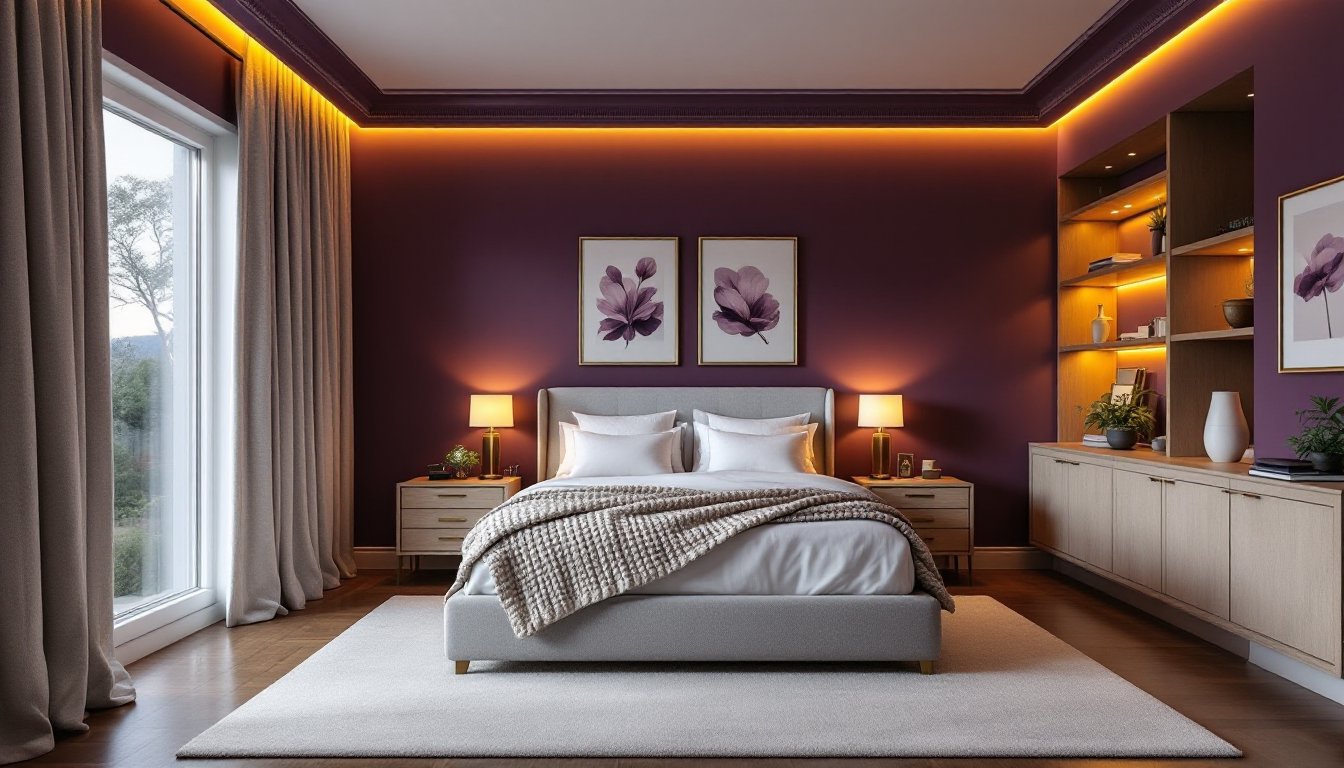
With dark purple as your backdrop, furniture choices matter more than in neutral rooms. Light wood, white, or pale gray furniture creates sharp contrast and prevents the space from feeling too heavy. A light-colored bed frame, dresser, or nightstands will anchor the room visually. If you prefer darker furniture, choose pieces in warm woods (walnut, cherry) rather than cold blacks or grays, they’ll harmonize with the purple rather than compete with it.
For upholstered pieces, consider neutral or complementary tones. A gray or white headboard, off-white bedding, or soft beige curtains work beautifully against dark purple walls. If you want color, jewel tones, emerald, sapphire blue, or deep teal, echo the luxury feeling of dark purple without clashing. Avoid competing warm colors like orange or rust unless they’re subtle accents. Metal accents in brass, gold, or brushed nickel add elegance and warmth to the space. A single brass or gold mirror, bedside lamp base, or picture frame can lift the entire room without overdoing it.
Lighting Solutions For Dark Purple Rooms
This is where many dark purple bedrooms fail. A moody color requires thoughtful lighting, or the room becomes a cave. Avoid relying solely on harsh overhead fixtures. Instead, layer your lighting with multiple sources at different brightness levels.
Start with dimmable overhead lighting so you can adjust ambiance. Add bedside task lighting, table lamps or sconces at about 40–60 inches above the floor, for reading and ambient light. Warm-toned bulbs (2700K color temperature) work best in bedrooms and complement purple beautifully. A third layer, accent lighting like LED strip lights behind a mirror or floating shelves, or wall sconces flanking the bed, adds depth and prevents the room from feeling flat. For budget-friendly solutions, string lights or small accent lamps placed strategically behind furniture create a sophisticated glow. Avoid cool white bulbs (above 4000K) in dark purple rooms: they’ll make the color feel clinical rather than cozy.
Textiles And Finishing Touches
Textiles soften a dark purple bedroom and add warmth. Quality bedding is worth the investment, 100% cotton or linen in neutral or complementary colors. A layered approach (fitted sheet, flat sheet, duvet, decorative pillows) creates visual interest and comfort. A chunky knit throw in cream, gray, or soft white draped over the bed adds texture and prevents the space from feeling austere.
Curtains are crucial. Floor-to-ceiling blackout curtains in a neutral gray, cream, or even a lighter purple shade control light and add a finished look. Heavy-weight fabrics (like linen-cotton blends) read more luxurious than thin synthetics and dampen outside noise. A rug in a warm neutral tone, ivory, light gray, or soft taupe, grounds the space and adds comfort underfoot. Interior design inspiration from curated sources often showcases how layered textiles transform bold wall colors. Add two or three artwork pieces in frames (metal or wood) with prints in complementary colors or neutrals. A statement piece like an upholstered ottoman in a light gray or a sculptural plant stand adds dimension without clutter.
Conclusion
A dark purple bedroom is an investment in a space you’ll genuinely want to retreat to. The key is balancing boldness with comfort: get the right shade, prepare your walls properly, layer your lighting, and let neutral or complementary pieces breathe. Done well, dark purple feels sophisticated, restful, and entirely yours, not trendy or temporary.