Table of Contents
ToggleYour bedroom walls are prime real estate for personality. Instead of leaving them blank or covered in a single flat color, strategic accent walls can anchor a room, reflect your style, and make the space feel intentional. Whether you’re dealing with a small guest room or a sprawling master suite, the right wall treatment transforms how the space feels, and how you feel in it. This guide walks through eight practical bedroom wall accent ideas, from bold paint to textured finishes, that work for renters and owners alike. Most require basic tools and a weekend of focused work.
Key Takeaways
- Bold paint colors on a single accent wall is the quickest way to add personality—choose saturated colors like deep greens, terracottas, or navy that feel calming yet confident in bedrooms.
- Bedroom wall accent ideas range from budget-friendly options like peel-and-stick wallpaper to more involved projects like shiplap, all achievable in a single weekend with basic tools.
- Modern wallpaper and textured wall coverings are easier to install and remove than ever; peel-and-stick varieties offer zero-damage options for renters.
- Gallery walls create a personal, reversible accent that works beautifully in bedrooms—arrange frames with 2–3 inches of consistent spacing and odd numbers of pieces for an intentional look.
- Layered lighting with wall sconces, LED strips, and artwork lights transforms how you perceive wall color and sets bedroom ambiance while supporting better sleep with warm 2700K color temperatures.
- Most bedroom wall accent projects cost under $200 in materials and deliver high visual impact without requiring renovations or permanent changes to your space.
Bold Paint Colors and Feature Walls
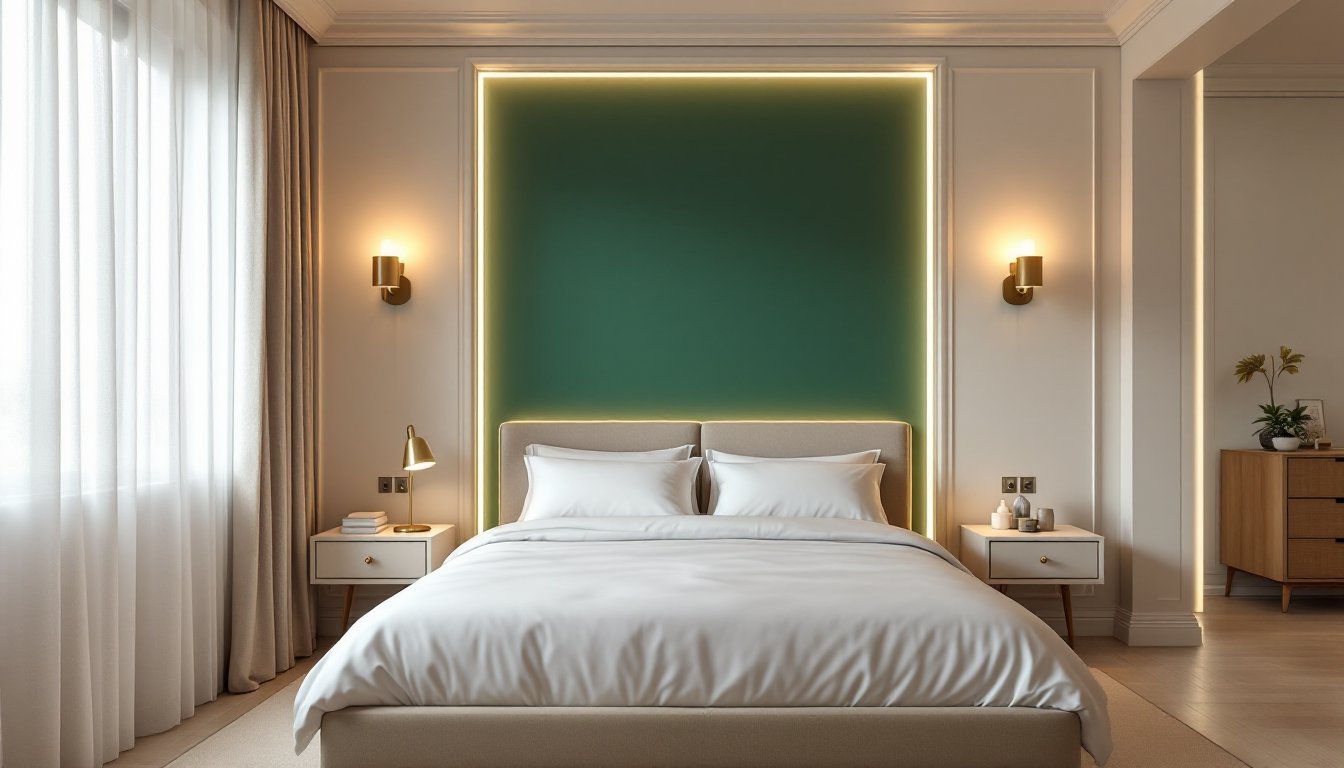
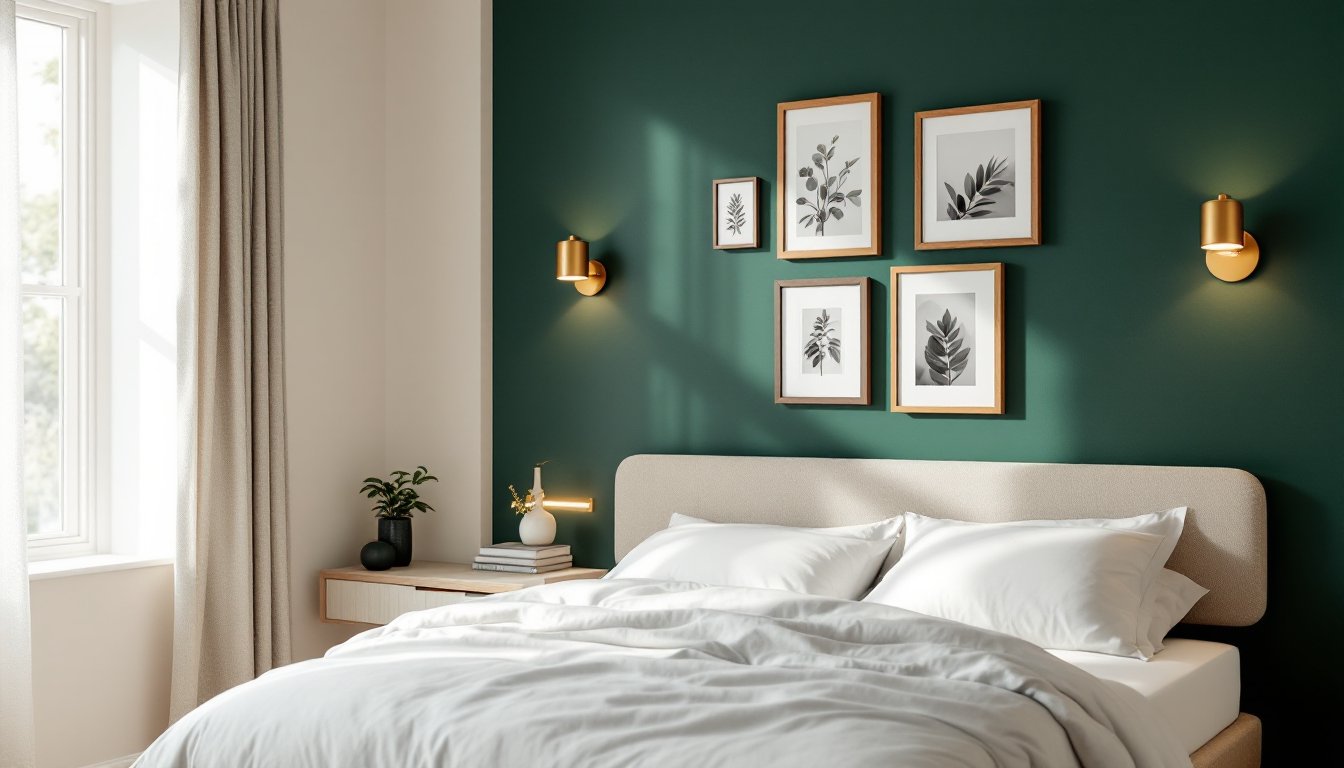
A bold paint color on a single wall is the quickest way to add visual weight without gutting your whole scheme. Pick the wall that draws the eye when you enter, usually the one opposite the door, behind the bed, or along a horizontal run that catches morning light.
Choose a color with enough saturation to matter. Pale pastels won’t read as accent: you want something that makes the room feel different. Deep greens, warm terracottas, charcoal grays, and muted navy all work well in bedrooms because they’re calming but confident. Paint one coat of primer (two coats if you’re going dark over light), then two coats of quality interior paint. A gallon typically covers 400 square feet, so a single accent wall in a standard bedroom uses a quart or less.
Paint finish matters too. Eggshell or satin hides wall imperfections better than flat and cleans more easily, useful if the wall takes dust or gets bumped. Flat paint absorbs light and feels softer: matte is currently trendy but shows fingerprints faster. Test your color in the actual room under the lighting conditions you live with. What looks sophisticated on a swatch in the store can feel oppressive at night under tungsten bulbs.
If you’re renting and can’t paint, peel-and-stick panels or temporary wallpaper give you the same impact for zero damage deposit risk.
Wallpaper and Textured Wall Coverings
Wallpaper is having a real moment. Modern options range from subtle texture to bold pattern, and removal is far easier than it was twenty years ago, especially with peel-and-stick varieties.
For a bedroom, avoid patterns so busy they prevent relaxation. Geometric patterns, large-scale florals, and subtle textures work better than tiny repeating motifs that tire the eye. Grasscloth, linen-look, and raised floral finishes add tactile depth without overwhelming the space. Damask and Moroccan prints can work if the scale is large and the color palette restful.
Measure carefully before ordering. Wallpaper comes in rolls of varying widths (usually 20.5″ to 27″ wide), and you’ll need to account for pattern matching and waste. Most pros recommend ordering 15% extra. Prime the wall first with a wallpaper-specific primer, especially if you’re covering paint or patched drywall. Unprimed drywall absorbs paste unevenly and creates bubbles.
If DIY hanging feels daunting, a professional can apply wallpaper for $200–$500 per wall depending on complexity and labor rates in your area. For textured coverings like shiplap-look wallpaper or fabric-backed options, the investment often pays off in finished quality. And if you change your mind in two years, most modern wallpaper peels cleanly from properly prepped walls.
Wood Accents and Shiplap Designs
Wood brings warmth and structural presence to a bedroom. A full shiplap wall is more labor-intensive than paint, but the payoff is real: it adds texture, defines the room, and works in modern, farmhouse, or eclectic settings.
Shiplap (horizontal boards with a thin rabbet joint along edges for a tight, visually continuous seam) comes in pine, spruce, or engineered MDF. Actual lumber averages 5–7″ wide by ¾” thick: MDF shiplap is cheaper and easier to paint, but real wood feels more substantial. For a single accent wall, budget 100–150 board feet depending on wall height. Plan to install a moisture barrier (15-lb building paper) first, then shiplap horizontally (or vertically, if you want a different look) over a base of 1×4 furring strips, fastened to studs with 2½-inch construction screws.
Use a level and a stud finder to locate studs: shiplap fastens through studs only. Drive nails or screws through the rabbet (hidden edge) so fasteners don’t show in the final wall. Caulk seams with paintable caulk, prime, and paint in two coats. A single accent wall takes 8–12 hours for a competent DIYer.
Shorter on time or not comfortable with framing? Shiplap-look peel-and-stick wallpaper or MDF shiplap planks (glued, not fastened) are faster alternatives. They won’t bear load or anchor shelving, but they look convincing in photos and cost a fraction of the real thing.
Gallery Walls and Art Displays
A gallery wall is a curated collage of frames, art, and sometimes functional pieces (like floating shelves) arranged to tell a story. It works beautifully in bedrooms because it’s personal without being cluttered, and it’s 100% reversible.
Creating a Cohesive Gallery Wall Layout
Start by laying frames flat on the floor in your intended arrangement. Aim for consistent spacing (2–3 inches between frames) and a balanced, off-center composition rather than a rigid grid. Odd numbers of pieces (5, 7, 9) tend to look intentional. Mix frame sizes, colors, and depths: unmatched frames feel curated, not mismatched.
Content matters as much as frames. Pair fine art prints with family photos, textiles, botanical illustrations, or even mirrors. Black-and-white photography reads calm: color pops: oversized single prints anchor the wall. Once you’re happy with the layout, use painter’s tape to mark frame positions, or photograph the arrangement and reference it as you hang.
Use the right fastener for your wall. Drywall anchors (toggle bolts or molly bolts) support 20–50 pounds depending on type. Plaster walls need masonry anchors. Studs take standard nails or screws. Hang the center piece first, then work outward: this prevents costly remeasuring. A stud finder and level are your friends here, crooked frames undermine the whole effect.
Rotate art seasonally or whenever you tire of it. Gallery walls evolve, and that’s the point. The bedroom becomes a reflection of where you are right now, not a static hotel room.
Lighting Accents and Bedroom Ambiance
Light shapes how you perceive wall color and texture. Strategic lighting can turn a plain wall into a focal point and set the bedroom’s entire mood.
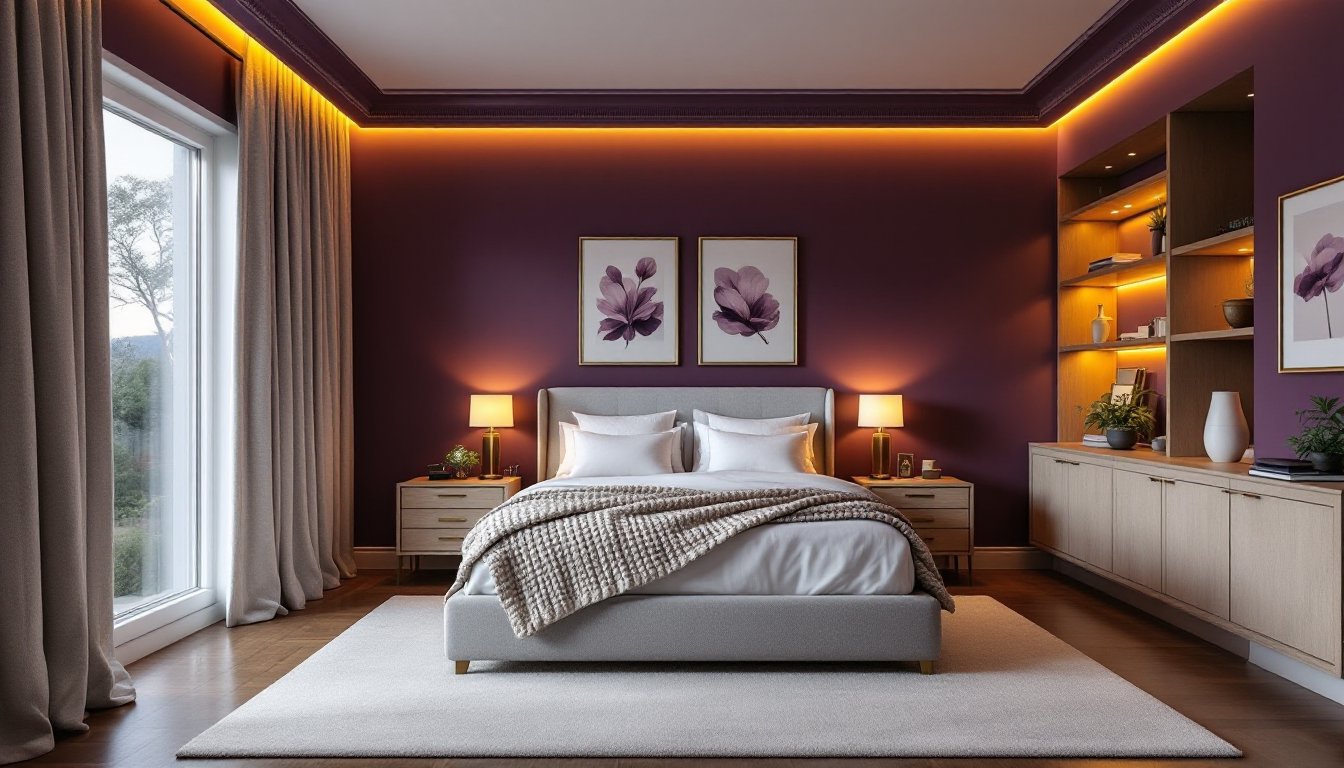
Wall sconces flanking the bed provide task light for reading and ambient glow without overhead brightness. Install them at eye level when sitting (roughly 60 inches from the floor). Hardwired sconces require an electrician if you’re adding a new circuit, but plug-in sconces with cord covers are renter-friendly and often 80% as effective. Look for sconces that complement your wall color, matte black on deep blue, brushed brass on warm gray.
LED strip lights mounted behind floating shelves or along the ceiling line create a subtle glow that accentuates texture and adds depth. These are plug-and-play: no electrician needed. Dimmable options (many WiFi-connected) let you adjust ambiance from energizing morning light to wind-down evening warmth.
Artwork lighting changes everything. A single adjustable art light above a gallery wall piece or oversized print adds sophistication and draws focus exactly where you want it. Battery-operated picture lights exist if running power is complicated.
Color temperature matters in bedrooms. Warm light (2700K) feels cozy and supports melatonin production: cool light (5000K) feels clinical and suppresses sleep hormones. Choose warm for evening lighting and save cooler tones for task work. Recent design inspiration sources often highlight how layered lighting, combining overhead, task, and accent light, creates bedrooms that feel intentional rather than utilitarian.
Conclusion
Bedroom wall accents aren’t luxury add-ons: they’re the difference between a room that feels like yours and one that feels borrowed. Whether you paint bold, hang wallpaper, install shiplap, arrange a gallery, or layer lighting, the goal is the same: make the space feel intentional and restful. Start with one accent wall or a single project, you can always build from there. Most of these ideas cost under $200 in materials and take a focused weekend. Your bedroom is where you spend a third of your life. It deserves to reflect who you are.