Table of Contents
ToggleA deck door isn’t just a functional threshold between house and yard, it’s the gateway to how you’ll live outside. Whether you’re updating an existing deck or building from scratch, choosing the right deck door can transform your backyard from an overlooked square of wood into your favorite living space. Modern deck doors come in styles ranging from sleek sliding glass to elegant French doors, each offering different benefits for light, space, and access. The right choice depends on your deck layout, climate, and how you actually use the space. This guide walks through seven proven deck door ideas that work for homeowners looking to improve both function and curb appeal.
Key Takeaways
- Sliding glass doors remain the top choice for seamless indoor-outdoor living because they require minimal clearance, offer unobstructed yard views, and improve energy efficiency with Low-E glass and dual-pane or triple-pane configurations.
- Bifold doors maximize space and light by opening to 90 percent of the doorway width, making them ideal for larger deck openings (6 to 12 feet) and entertaining, though they require professional installation and more maintenance than sliders.
- French doors add traditional elegance and architectural character but demand more clearance to swing open and are less energy-efficient than modern alternatives, making them best suited for spacious decks with cottage or colonial-style homes.
- Pocket doors solve space constraints by sliding entirely into wall cavities, but their installation is complex and costly, requiring skilled carpenters and a thick wall cavity of 4 to 6 inches.
- Material durability depends on choosing fiberglass, composite, or vinyl frames over wood (which needs staining every 2-3 years) and ensuring dual-pane Low-E glass with proper weatherproofing, thermal breaks, and stainless steel hardware to prevent rust and rot.
- Installation precision and maintenance—including level and square framing, proper sill sloping, seasonal track cleaning, and annual weatherstripping checks—determine whether your deck door performs reliably for decades.
Sliding Glass Doors: The Timeless Choice for Seamless Indoor-Outdoor Living
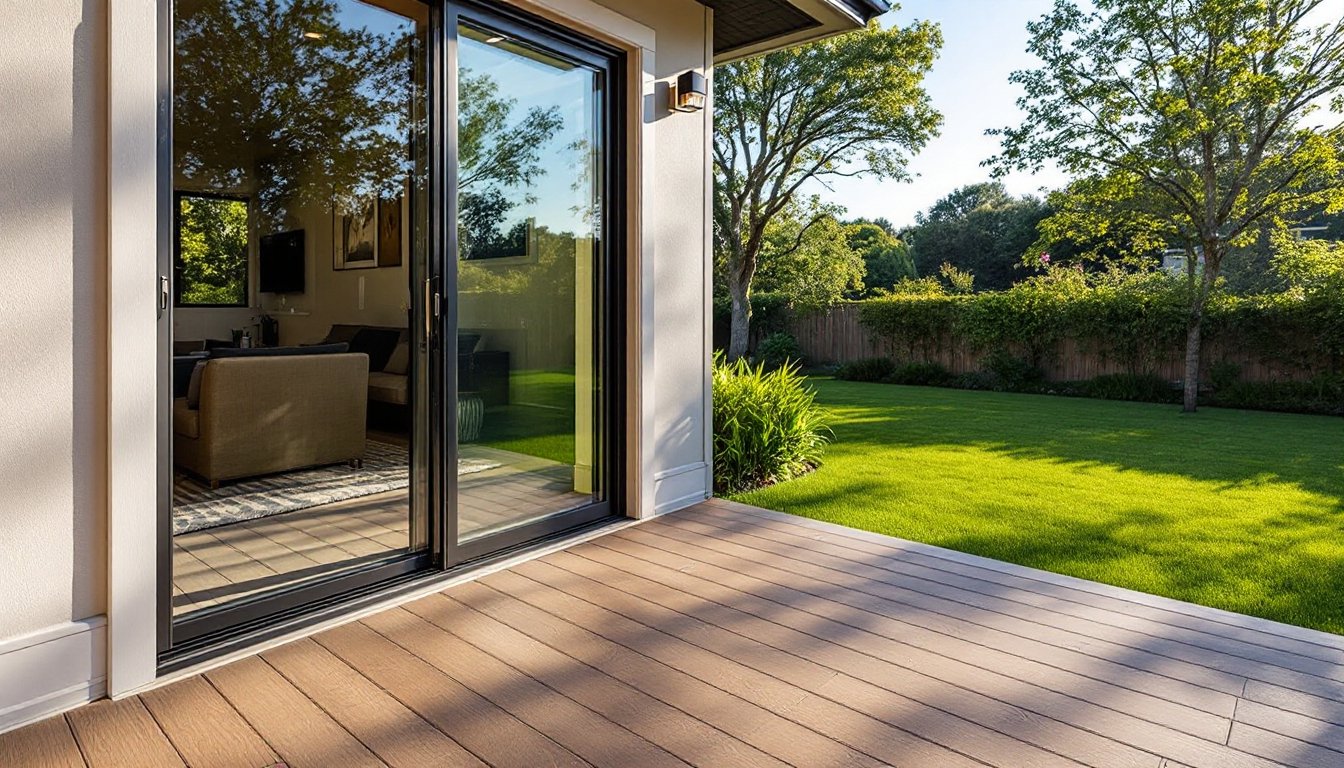
Sliding glass doors remain the most popular deck door choice, and for good reason. They open horizontally along a track, requiring minimal clearance and offering an unobstructed view of your yard. A standard sliding glass door typically measures 36 inches wide by 80 inches tall, though 48- and 60-inch widths are common for larger openings.
The appeal is practical: they’re easy to operate, nearly childproof compared to hinged doors, and they let natural light flood your interior. They also work in tight spaces where a door that swings outward would be impractical. Insulation has improved dramatically in recent years, look for units with Low-E glass, thermal breaks, and dual-pane or triple-pane configurations to reduce heating and cooling loss.
One trade-off: the track requires regular cleaning to slide smoothly, and sealing the weatherstripping matters for energy efficiency. If you live in a region with high wind loads or heavy snow, confirm your sliding door meets local building codes for your area’s specific requirements. Many homeowners also find that screens on sliding glass doors require periodic adjustments as the frame settles.
Bifold Doors: Maximizing Space and Light on Your Deck
Bifold doors fold back accordion-style, stacking against the side of the opening when fully open. This design is brilliant if you want an almost-wall-free transition between indoors and out. Unlike sliding doors, bifold units can open to 90 percent of the doorway width, creating a massive pass-through perfect for entertaining or moving furniture.
Bifold doors are becoming increasingly popular for deck renovations, especially on larger openings (6 to 12 feet wide). They handle wide spans better than sliding glass doors and look contemporary. The downside: they require more maintenance than sliders because they have more moving parts and hinges. Weather sealing is trickier, so they’re better suited to covered decks or milder climates.
Installation is more involved than a standard slider. The rough opening needs to be very square and level, and the header above must be properly sized for the load it’s carrying. This often requires temporary support bracing during installation. Most DIYers should hire a professional for bifolds, getting the alignment right is critical for smooth operation and weather resistance.
French Doors: Adding Elegance and Traditional Charm
French doors swing inward or outward and feature multiple small glass panes arranged in a grid pattern. They bring traditional architectural character to a deck and suit homes with colonial, farmhouse, or cottage aesthetics. Each door typically measures 36 inches wide, so pairs are standard for deck transitions.
The charm comes with trade-offs. They require more clearance to swing open, if your deck is tight or has outdoor furniture right at the threshold, French doors can feel cramped. They’re also less energy-efficient than modern sliders or bifolds because the muntins (the strips separating panes) break up the glass plane and interrupt the insulation value.
Durable French door installations use solid wood or fiberglass frames with quality hardware and heavy-duty hinges rated for outdoor use. Painted or stained wood frames look beautiful but need regular maintenance to prevent rot, especially on the sill where water pools. Pre-finished fiberglass doors from quality manufacturers reduce upkeep significantly. French doors work beautifully when paired with design ideas for decks and patios that emphasize traditional or cottage-style landscaping.
Pocket Doors: The Space-Saving Solution for Compact Decks
Pocket doors slide entirely into the wall frame, disappearing when open. For small decks where every square foot matters, they’re a game-changer. When fully extended, they open the entire width of the passage without eating up floor space for a swing radius.
Pocket doors have a serious limitation: they require a thick wall cavity, typically 4 to 6 inches, between the inside and outside. If your deck connects to a thin exterior wall or you’re dealing with existing framing, retrofitting can be complicated. Installation often involves removing and rebuilding sections of wall, making it a job for skilled carpenters rather than casual DIYers.
Operationally, they’re smooth and quiet when properly installed. Sealing the gap where the door slides into the pocket is the main challenge for weatherproofing. They’re best suited to covered decks or transitional spaces where occasional drafts are acceptable. Long-term, make sure the track stays clear of debris and the door moves freely, a seized pocket door is harder to free up than a jammed slider.
Choosing the Right Materials and Finishes for Durability
Material choice makes or breaks a deck door’s longevity. Wood offers warmth and traditional appeal but requires regular staining or painting, every 2 to 3 years in harsh climates. Fiberglass resists rot, warping, and splitting, holding paint or stain longer than wood. Aluminum frames are lightweight, durable, and low-maintenance but conduct heat and cold, reducing insulation value unless they have thermal breaks.
For decks, composite frames (a blend of wood fiber and plastic) or vinyl are increasingly popular because they resist moisture and need minimal maintenance. They don’t match the aesthetic warmth of solid wood, but they’re honest and durable.
Glass choice matters equally. Single-pane glass is cheap but offers almost no insulation. Dual-pane glass with Low-E coating is the practical standard, it reduces heat loss in winter and heat gain in summer while blocking UV rays that fade interior furnishings. Triple-pane is overkill for most climates but valuable in extreme cold regions.
Finishing is where many DIYers skip critical steps. All exposed wood must be sealed or painted before installation. Gaps around the frame should be filled with exterior-grade caulk or backer rod and sealant, not just left open to weather. Metal hinges and hardware must be stainless steel or hot-dipped galvanized: regular steel rusts quickly on decks. Resources like home renovation cost guides and remodeling ideas can help you budget for quality materials.
Installation Tips and Maintenance for Long-Lasting Performance
Installation quality determines whether your door functions smoothly for decades or becomes a sticky nightmare in five years. The rough opening must be square, level, and plumb, check with a level and a speed square. Any deviation more than ¼ inch over the height of the door will cause binding.
Shims (thin wedges) hold the frame in position while you secure it. Resist the urge to over-tighten screws, you can rack the frame and make the door difficult to operate. Fasteners should penetrate at least 1.5 inches into solid framing. Exterior-grade caulk or spray foam seals the gap between frame and rough opening: don’t rely on caulk alone on exposed decks.
The sill (bottom of the frame) is where water damage starts. It must slope slightly away from the house, at least ¼ inch per 12 inches of length, so water sheds outward, not pooling against your rim joist. Some installers add a drip edge or flashing underneath for extra protection.
Maintenance keeps doors working smoothly. Sliding glass doors: clean the track quarterly with a vacuum and stiff brush, then lubricate with silicone spray, not oil-based products that attract dirt. Hinged doors: wipe frames and hardware after salt spray or heavy rain. Check weatherstripping yearly: if it’s cracked or compressed, replace it. Caulk cracks immediately before water gets behind the frame. For design consultation and cost estimates, platforms like Houzz connect you with contractors who specialize in deck renovations and can handle complex installations professionally.
Conclusion
The right deck door opens up how you live, literally and figuratively. Sliding glass doors offer timeless simplicity: bifolds maximize openness: French doors bring character: pocket doors save space. Your choice depends on your layout, climate, and how much maintenance you’re willing to do. Don’t skimp on insulation, weatherproofing, or installation quality. A poorly installed premium door will fail faster than a modest door installed with precision and care. Take your time choosing, prep surfaces properly, and your deck door will serve reliably for years to come.