Table of Contents
ToggleBeige has quietly become one of the most versatile neutrals in bathroom design, and for good reason. It’s warm without being dated, professional without feeling sterile, and forgiving with lighting changes throughout the day. If you’re planning a shower renovation and sitting on the fence about beige tile, you’re actually looking at dozens of design directions, from sleek minimalism to textured, organic finishes. Whether you’re doing a full gut renovation or just refreshing the shower surround, beige tile offers the flexibility to create a sophisticated, timeless space that complements any bathroom aesthetic. This guide walks you through the best beige shower tile ideas for 2026, with practical advice on materials, layouts, and installation considerations.
Key Takeaways
- Beige shower tile ideas offer a versatile, timeless neutral that hides water spots better than white and adapts to various grout colors, layouts, and design styles from minimalism to textured finishes.
- Large-format beige porcelain tiles (12×24 inches or larger) with matte finishes deliver a spa-like, low-maintenance aesthetic that minimizes grout lines and mildew growth, costing $2–$5 per square foot installed.
- Classic beige subway tiles in running bond or stacked bond layouts remain forgiving for DIY installation and work equally well with neutral or contrasting grout to create intentional, contemporary or traditional looks.
- Herringbone and geometric beige tile patterns add visual interest and sophistication but require careful template planning and typically result in 15–20% material waste.
- Mixing beige with strategic accent tiles in dark gray, charcoal, or muted tones at chair-rail height creates designer-quality definition without overwhelming the shower space.
- Natural stone options like limestone and travertine deliver luxury warmth and organic character but require professional installation, annual sealing, and pH-neutral cleaners to maintain longevity in wet bathroom environments.
Why Beige Tiles Are Perfect for Modern Bathrooms
Beige isn’t a compromise, it’s a strategic choice. In a shower space, beige tile works because it handles moisture variability, hides water spots better than white, and provides a neutral backdrop for fixtures and hardware that become your design accents.
From a practical standpoint, beige tile comes in every format: large-format porcelain that minimizes grout lines, small subway tiles for classic looks, textured finishes that improve slip resistance, and natural stone options like limestone or travertine. The material choices matter as much as the color. Porcelain beige tiles are durable, low-maintenance, and ideal for wet areas. Natural stone requires sealing and more care but delivers warmth and character that engineered materials sometimes miss.
Beige also adapts to different grout colors. Contrast it with dark grout for a grid effect, or match it for a seamless, calm appearance. This flexibility makes beige shower tile an investment that lasts stylistically, you won’t wake up in five years wishing you’d chosen something different. Designers and homeowners across bathroom renovations favor beige because it reads as intentional, never rushed or budget-conscious.
Classic Large-Format Beige Tiles for Sleek Minimalism
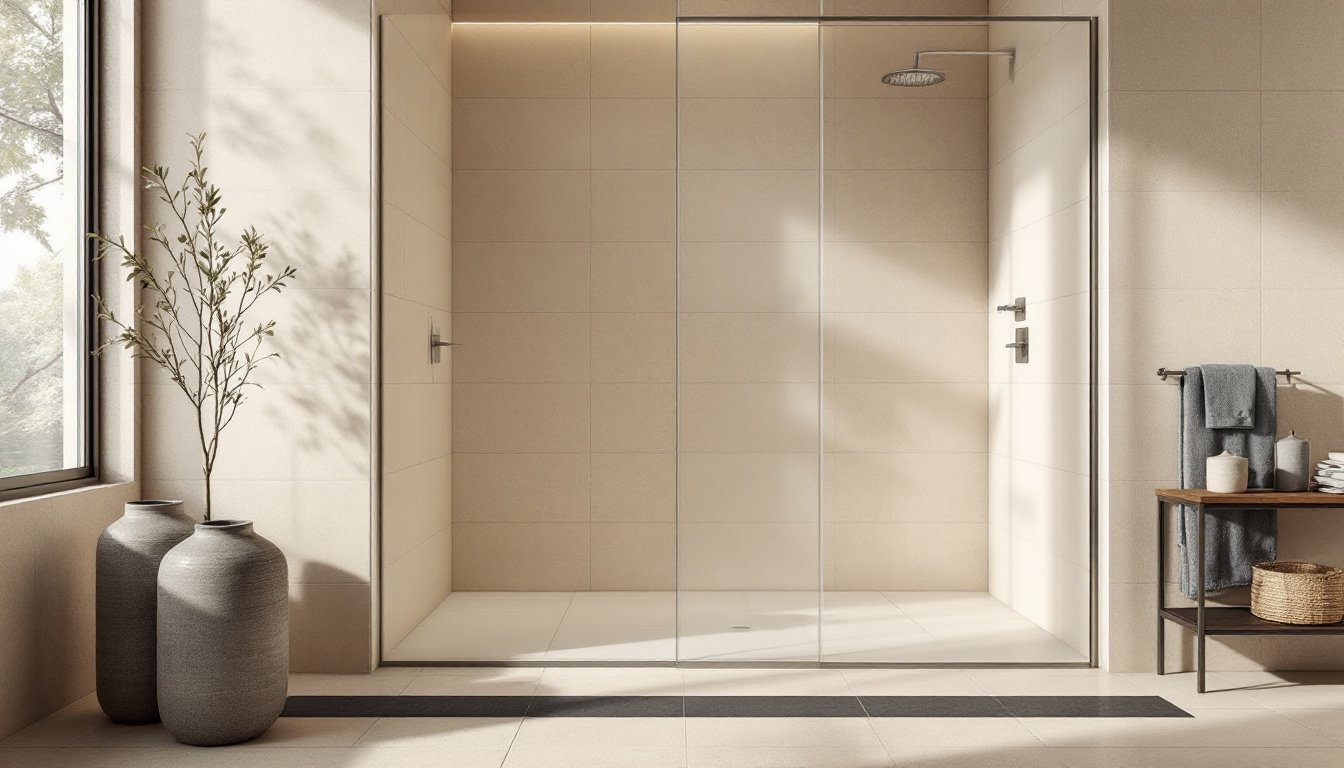
Large-format tiles, typically 12×24 inches, 18×36 inches, or even 24×48 inches, create the modern, low-maintenance look that dominates high-end bathroom design today. In beige, they deliver clean lines and a spa-like calm. Fewer grout lines mean fewer places for mildew to hide and less visual busy-ness in the shower.
When selecting large-format beige porcelain, look for matte or satin finishes rather than high-gloss. Matte hides water marks and soap residue better, and it’s safer underfoot when wet. Confirm the tile’s PEI (Porcelain Enamel Institute) rating, a minimum of 3 or higher for shower walls: for shower floors, use rating 4 or higher to resist wear. Beige porcelain in matte finish typically costs $2–$5 per square foot installed, depending on your region and labor costs.
Installation is straightforward with large-format tiles: use a notched trowel (typically ½-inch square notch) and thin-set mortar rated for wet areas. The main challenge is keeping the tiles level, large tiles show imperfections in substrate more than small tiles do. Ensure your shower surround is flat and plumb before laying tile. If your walls aren’t perfectly straight, you’ll see it across a 24-inch expanse. Many DIYers hire a professional tiler for large-format work: it’s worth the cost to avoid lippage (uneven tile edges).
Textured and Patterned Beige Tile Options
Not all beige tile is flat and monochromatic. Textured and patterned options add visual interest without abandoning the calming beige palette.
Subway Tiles With Subtle Variations
Beige subway tiles, the classic 3×6 inch or 4×8 inch format, remain popular because they’re forgiving to install and timeless. Look for tiles with slight variation in tone and surface texture. A honed finish (matte, slightly textured surface) or tumbled edge subway tile in warm beige reads as intentional and adds tactile interest without being loud. Subway tiles in running bond or stacked bond layout work equally well: running bond is more traditional and visually dynamic, while stacked bond feels modern and organized.
Subway tile costs $1–$3 per square foot and is much easier for DIY installation than large-format tile, the smaller size is forgiving if your substrate isn’t perfectly flat. Use a ¼-inch notched trowel and standard thin-set. Grout joints for subway tile typically run ⅜ inch wide: use epoxy grout in a neutral shade or a contrasting dark grout if you want the grid pattern visible.
Herringbone and Geometric Patterns
Herringbone layouts using beige tiles, whether 3×6 subway, 2×8 plank-style, or larger rectangular tiles, create movement and sophistication. Herringbone is more complex to layout and cuts waste material, but the payoff is a gallery-worthy appearance. If you’re attempting this yourself, lay out a full template on kraft paper first: mark cut tiles and verify the pattern fits your shower walls before starting.
Geometric patterns using 12×12 inch or 16×16 inch tiles in coordinating beiges (like cream, taupe, and warm sand) create subtle visual texture. Mosaic patterns require more precision and patience but transform a plain shower into custom architectural detail. Budget extra time for layout and expect a 15–20% material waste with any patterned tile work.
Mixing Beige With Accent Tiles and Borders
Beige as a base with strategic accent tiles is a designer move that works in every style, from contemporary to transitional. The key is restraint and intentional placement.
A single stripe of accent tile, dark gray, charcoal, navy, or even a muted terracotta, running horizontally at chair-rail height (around 48 inches from the floor) breaks up a large beige expanse and adds visual anchor. Keep the accent tile width to 3–6 inches: wider stripes can feel heavy. Alternatively, frame the shower entrance or a feature wall with a ⅛ to ½-inch border in a contrasting material or color. This works especially well with natural stone accents, a thin limestone or slate border in darker tones against warm beige creates premium, collected appearance.
For the shower floor, consider mixing beige tile with a contrasting border tile or small mosaic inlay. The floor is a practical place to add grip and visual interest without overwhelming the space. A bullnose edging tile, the rounded-edge trim that finishes exposed tile edges, should match your primary beige tile or be a complementary accent. Beige bullnose costs slightly more than field tile, around $1.50–$3 per linear foot.
When mixing materials or colors, test samples in your actual shower lighting before committing. Beige reads differently under natural light, warm LED bulbs, and cool fluorescent fixtures. Bring home large samples and live with them for a few days if possible.
Natural Stone and Terrazzo Beige Finishes
Natural stone tile, limestone, travertine, and marble in warm beige tones, delivers luxury and organic warmth that engineered porcelain can’t quite replicate. The trade-off is maintenance and cost.
Limestone and travertine are porous, softer than porcelain, and require sealing before installation and annually afterward. They’re vulnerable to acidic cleaners, so you’ll need pH-neutral cleaners only. But in a shower, especially a steam shower, the moisture and warm environment actually complement stone’s organic character. Stone tiles for bathroom use should be honed (matte) rather than polished for slip safety: expect a subtle, muted appearance that’s forgiving with water spots. A professional tile setter has experience working with natural stone in wet areas and can advise on sealing and long-term care.
Terrazzo is a composite material, crushed stone, glass, or recycled material bound in resin or cement, that mimics natural variation while offering engineered durability. Beige terrazzo with subtle flecks of cream, taupe, and gray reads as warm and textural without requiring stone maintenance. Terrazzo is trending in 2026 for exactly this reason: luxury aesthetic, engineered durability, and eco-friendly material options. Terrazzo tile costs $4–$10+ per square foot installed, depending on customization: natural stone runs $5–$15+ per square foot.
Both options require professional installation due to their weight, fragility, and finishing requirements. If you’re drawn to the look but hesitant about cost or maintenance, consider porcelain tiles that mimic natural stone finishes, they’ve improved dramatically and offer 90% of the aesthetic with 10% of the fuss. Samples matter enormously with natural materials: see them in person before ordering full quantities.