Table of Contents
ToggleA deck doesn’t have to be just a place to sit and watch the sunset, it can become a vibrant garden that brings color, fragrance, and fresh herbs within arm’s reach. Planter boxes are one of the easiest ways to grow vegetables, flowers, or herbs on a deck without sprawling landscaping projects or foundation work. Whether you’re working with a small balcony or a sprawling composite deck, there’s a planter strategy that fits your space and skill level. We’ll walk you through seven proven deck planter box ideas that maximize growing space, look intentional, and survive the outdoor elements.
Key Takeaways
- Raised deck planter boxes made from cedar or pressure-treated lumber are an easy way to grow vegetables and herbs without extensive landscaping, with standard dimensions of 2 by 4 feet and 12 inches deep.
- Tiered planter box designs maximize visual interest and growing space in a compact footprint, but require positioning over deck joists to safely support weights exceeding 1,000 pounds when wet.
- Vertical planter systems and living walls are ideal for small decks, fitting dozens of plants into just 2 square feet using wall-mounted pockets with drip irrigation for efficient watering.
- Proper drainage with at least four ¾-inch holes per planter and landscape fabric lining are essential to prevent waterlogged roots and fungal rot that damage both plants and your deck.
- Cedar and redwood resist rot naturally but cost more, while pressure-treated lumber lasts 15–20 years; composite and metal options require less maintenance but carry higher upfront costs.
- Shallow-rooted vegetables like lettuce and herbs thrive in 6–8 inches of soil, while tomatoes need 10–12 inches and root vegetables require at least 12 inches for proper development.
Raised Planter Boxes for Maximum Deck Space
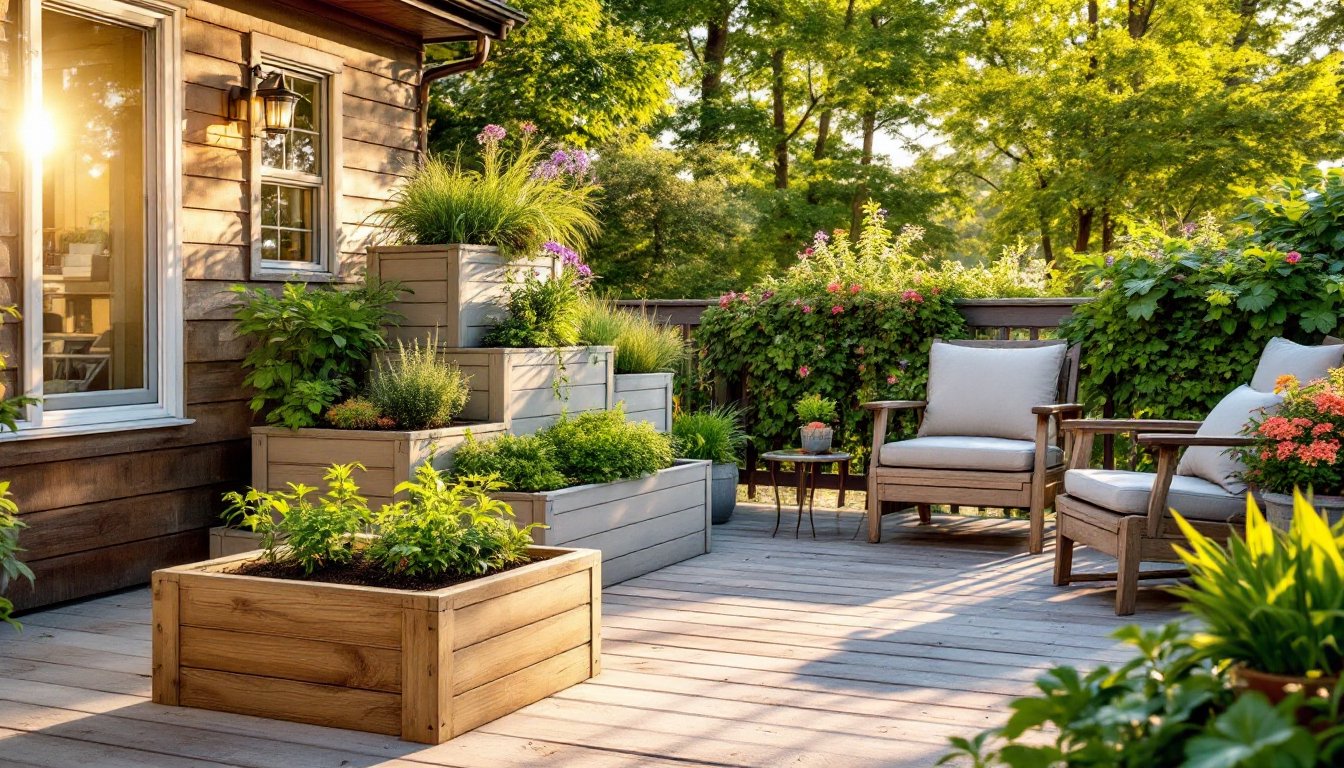
A raised planter box sits directly on the deck surface and is the workhorse of deck gardening. Build one from cedar boards (rated naturally rot-resistant) or pressure-treated lumber: avoid untreated softwood, which splits and warps within a season. Standard dimensions are 2 feet by 4 feet and 12 inches deep, manageable to build and fill without excessive weight on the deck framing.
Start with nominal 2×12 cedar boards (actual dimension: 1.5 inches by 11.25 inches) and corner posts cut from 4×4 stock. Assemble with deck screws rated for outdoor use, not nails, since fasteners will loosen with freeze-thaw cycles. Drill drainage holes in the bottom, at least four ¾-inch holes per 4-by-2-foot box, and line the interior with landscape fabric to separate soil from the wood and slow decay.
Check your deck’s load capacity before stacking multiple boxes. A fully saturated 4-by-2-foot box filled with soil weighs roughly 400–500 pounds. Most residential decks rated for 40 pounds per square foot can handle one box per 16 square feet of deck surface, but verify with your home’s original construction documents or a structural engineer if in doubt.
Tiered Planter Designs for Enhanced Visual Interest
Tiered planter boxes create visual depth and allow you to grow more plants in a compact footprint. Think of three boxes stacked in a pyramid, the largest at ground level (24 inches wide), a medium box (18 inches) at mid-height, and a small one (12 inches) at the top. Build each tier from cedar or composite boards, anchoring them to each other with hidden brackets or corner braces so they don’t shift.
This design works beautifully for ornamental grasses, trailing sedums, and cascading petunias that spill downward. Place the tallest plants in the rear tier and shorter bloomers in front so nothing gets shaded out. The stairs effect also reduces wind exposure on upper tiers, which dries out soil faster, a trade-off worth noting in arid climates.
Weight is the catch: a three-tier stack can exceed 1,000 pounds when wet. Position tiered boxes over deck joists (perpendicular support beams), not between them, and use shims to level the base. If your deck can’t accommodate that load, build one or two tiers instead, or use lightweight composite boards and potting mix amended with perlite to reduce weight.
Container Gardening With Built-In Seating
Combine storage and gardening by building a planter box bench. Construct a hollow wooden box 18 inches deep, 48 inches wide, and 16 inches tall, with a hinged lid. The cavity below becomes your soil volume, while the lid flips open to reveal soil for planting. Add a cushion on top and you’ve got an extra seating spot that also grows vegetables or flowers.
Use composite decking boards or high-grade cedar for the sides to resist moisture and rot. Line the interior with a heavy plastic sheet (6-mil polyethylene) stapled to the frame, leaving one corner cut for drainage. The hinged lid must be sturdy, piano hinges rated for at least 50 pounds are standard. Gas struts (the kind that hold truck beds open) prevent the lid from slamming and make it easier for kids or older adults to operate.
Fill the base cavity with potting mix and plant shallow-rooted crops like lettuce, herbs, or pansies. The buried soil stays moister than a typical planter and the enclosed space moderates temperature swings. Be aware that sitting on a planter box puts localized pressure on the deck frame, install it over a joist or reinforce the deck framing underneath if spacing is tight.
Vertical Planter Systems for Small Decks
When square footage is at a premium, grow upward. Wall-mounted planter pockets (also called living wall systems) attach to the deck railing or a wooden trellis frame mounted to the house. Each pocket holds 2–3 quarts of potting mix and a shallow-rooted plant, herbs, sedums, or trailing nasturtiums thrive in this setup. Some systems offer 12 or more pockets per vertical panel, giving you dozens of plants in just 2 square feet of deck space.
Options range from DIY pocket systems made from felt or recycled plastic bags to commercial modular units. Attach pockets with corrosion-resistant brackets or cable ties, ensuring each pocket has a drainage hole. Use a soaker hose or drip irrigation line to water the top pocket: water cascades down to lower pockets. Without drip irrigation, manually watering a tall wall is tedious and leads to uneven moisture.
Vertical systems dry out faster than ground-level planters because of air exposure on multiple sides. In hot climates, orient the wall to catch morning sun and afternoon shade. In cooler regions, southfacing walls absorb heat and extend the growing season. Lightweight potting mix (blended with coconut coir or peat moss) reduces strain on fasteners.
Materials and Maintenance Considerations
Wood type matters. Cedar and redwood resist rot naturally but cost 40–60% more than pressure-treated lumber. Pressure-treated lumber is safe for ornamental plants (old arsenic-based treatments were phased out decades ago) and lasts 15–20 years if maintained. Composite decking boards (plastic and wood fiber blends) don’t rot and require less painting, but they’re heavier and more expensive upfront. Metal or fiberglass boxes suit modern deck aesthetics and won’t deteriorate, though they heat up in direct sun, stressing roots.
Drainage is non-negotiable. Waterlogged roots cause fungal rot and plant death. Drill holes in the bottom of any planter, and place saucers or trays underneath to catch runoff, don’t let water pool on the deck surface or you’ll accelerate deck rot. Use a potting mix designed for containers (not garden soil), which drains better and contains balanced nutrients. Amend with compost or slow-release fertilizer granules at planting time.
Seal wooden boxes yearly with exterior deck stain or polyurethane sealant to extend life. Inspect for loose fasteners, splintered wood, and soft spots (signs of rot) each spring. Rotate soil annually or add a 2-inch layer of fresh compost to the top: old soil becomes compacted and nutrient-depleted. In cold climates, drain water from planter boxes in fall to prevent ice expansion damage to the wood.
Selecting Plants and Styling Your Deck Garden
Shallow-rooted plants thrive in deck planters. Lettuce, spinach, kale, and most herbs need only 6–8 inches of soil. Tomatoes and peppers tolerate 10–12 inches. Carrots and beets require 12 inches minimum to develop fully. If you’re growing ornamentals, consider sun exposure on your deck, most vegetables and herbs demand 6–8 hours of direct sunlight, while hostas and shade-tolerant sedums work in partial shade.
Layering height creates visual impact and functional efficiency. Place tall plants (sunflowers, pole beans) on the north side of the planter so they don’t shade shorter companions. Trailing plants like petunias or English ivy spill over the planter edge, softening hard lines. Gardens featured in Southern Living often mix ornamental and edible plants, marigolds deter pests while adding color, and nasturtiums are both pretty and edible.
Consider deer and insect pressure. Fencing or netting over a planter wards off deer and rabbits: deer rarely browse plants elevated 24+ inches off the ground. Encourage beneficial insects by planting native perennials near your vegetable planters. A practical approach combines function with aesthetics, grow what you eat or enjoy, arrange it for visual balance, and let the planter itself (materials, finish, placement) be part of your deck’s design.
Conclusion
Planter boxes transform a deck from purely functional to productive and beautiful. Whether you opt for a simple raised box, a tiered showpiece, or a vertical wall garden, success depends on sound construction, proper drainage, and plant selection matched to your light and space. Start with one or two boxes this season, learn what works in your microclimate, and expand next year. Your deck garden will reward you with fresh herbs, vegetables, and the satisfaction of building something practical with your own hands.