Table of Contents
ToggleA 17-year-old’s bedroom is more than just a place to sleep, it’s a command center for gaming, studying, hanging out with friends, and decompressing after a long day. By the time a boy hits his late teens, his space should reflect who he’s becoming: independent, stylish, and functional. Whether he’s prepping for college applications, streaming with friends online, or pursuing hobbies that demand dedicated space, the right bedroom setup makes all the difference. This guide walks through practical modern bedroom ideas tailored for 17-year-old boys, balancing aesthetics with the real-world demands of teen life in 2026.
Key Takeaways
- Create dedicated gaming and study zones with ergonomic seating, wall-mounted monitors, and proper cable management to support both entertainment and academic work in a 17-year-old boy bedroom.
- Implement smart vertical storage solutions like under-bed containers, floating shelves, and closet organization to maximize space without cluttering the room.
- Layer your lighting with dimmable overhead fixtures (warm white 2700K), task lamps at the desk, and accent LED strips to reduce eye strain and set the right mood for gaming, studying, or relaxing.
- Choose a mature color scheme with dark neutrals as the base paired with one accent color, using removable wallpaper or framed art to personalize without looking trendy or immature.
- Invest in durable furniture with clean lines—solid wood bed frames, sturdy nightstands with drawers, and properly anchored dressers—that will last through teen years and college.
- Maintain open floor space with at least a 3-foot pathway and avoid overcrowding, keeping the room functional and navigable while balancing personality with aesthetic restraint.
Create A Gaming And Entertainment Hub
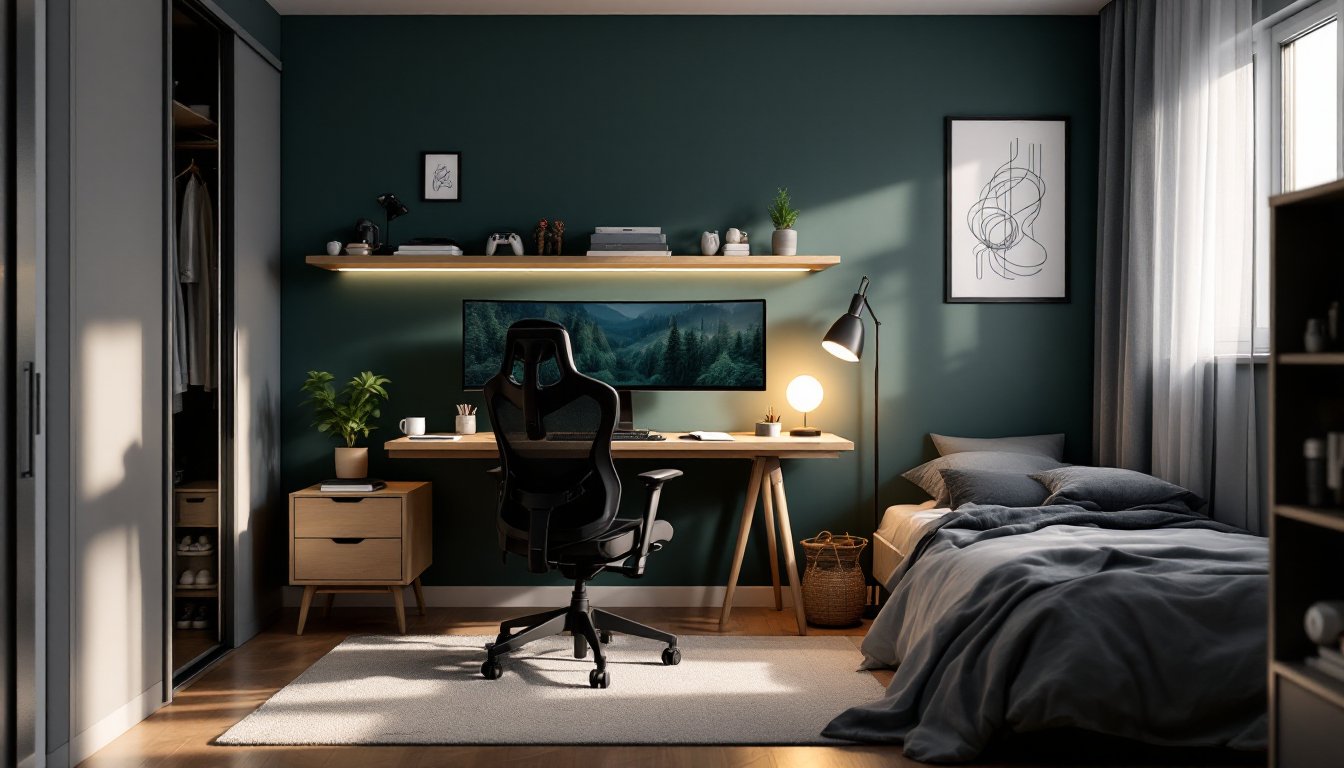
Most 17-year-old boys spend significant time gaming, streaming, or watching content, so carving out a dedicated entertainment zone makes sense. This doesn’t mean a full arcade setup: it means positioning the bed or a gaming desk to face a wall-mounted monitor or TV.
Start with a monitor arm or adjustable desk mount that lets him tilt, rotate, and adjust height without anchoring to one spot. A curved or ultrawide monitor (27–34 inches) offers better immersion than a standard display, especially for competitive gaming or content creation. Wall-mounting the monitor frees up desk real estate and looks cleaner than a monitor stand wobbling on a cluttered surface.
For console or PC gaming, run cables through a cable management box or raceway along the wall, not draped across the floor. Tangled cables are a tripping hazard and make the space look chaotic. Consider a surge-protected power strip with USB ports positioned near the desk so he’s not hunting for outlets.
Seating matters. A gaming chair with lumbar support beats a regular office chair for hours-long sessions, but make sure it fits the room’s scale, an oversized racer-style chair in a small bedroom just eats space. A quality ergonomic desk chair (not a gimmick brand) is honestly better than a flashy gaming seat if his sessions are marathon study marathons mixed with gaming.
Speaker placement is key. Desktop speakers or a small soundbar mounted on a shelf or under the monitor deliver cleaner audio than relying on monitor speakers, and they keep the desk from getting too crowded. If he uses headsets, a wall-mounted headphone stand (simple metal arm, under $20) keeps them organized and accessible.
Design Your Study And Work Zone
At 17, assignments, college prep, and side projects demand a serious work surface, separate from the gaming zone if space allows. A sturdy desk at least 48 inches wide gives room for a monitor, notebook, textbooks, and a cup of water without constant shuffling. If the room is tight, a corner desk or L-shaped configuration maximizes surface area in a small footprint.
Desk height matters more than most teens realize. Standard desks sit around 30 inches tall, which works if his chair has good height adjustment. His elbows should hit roughly 90 degrees when sitting, with wrists straight and screen at eye level. Poor ergonomics lead to neck strain and fatigue, real issues if he’s grinding through applications or long study sessions.
Storage directly above or beside the desk keeps essentials within arm’s reach. Wall-mounted shelves (12–24 inches deep) hold textbooks, notepads, and reference materials without taking up floor space. A pegboard with hooks for headphones, charging cables, and a desk lamp offers flexibility and looks intentional, not cluttered.
Lighting at the desk is non-negotiable. A task lamp with a warm-white LED bulb (3000K color temperature) reduces eye strain during evening study sessions. Pair it with ambient room lighting so the desk isn’t a bright island in darkness, that contrast causes fatigue. Sites like Apartment Therapy showcase how thoughtful desk setups transform productivity and mood in bedrooms.
Document organization prevents chaos. A desktop file organizer or small cabinet keeps printouts, writing pads, and school materials sorted. Sticky notes and loose papers scattered across the desk look sloppy and waste time hunting for things.
Smart Storage Solutions For Maximum Space
A 17-year-old collects gear: sneakers, hoodies, sports equipment, textbooks, gaming accessories, collectibles. Without smart storage, the room turns into a pile. The key is vertical storage and multi-use furniture.
Under-bed storage containers (rolling drawers or flat boxes) hold off-season clothes, extra bedding, or rarely-used items. Make sure they’re easy to pull out, sliding on wheels beats dragging a heavy box. Measure the clearance first: typical bed frames sit 10–12 inches high, so keep containers under 10 inches tall to fit underneath.
A tall narrow shelving unit (5–6 shelves, 24–30 inches wide) slots into a corner and stores books, collectibles, gaming hardware, or folded clothes without eating much floor space. Floating shelves mounted above the desk or beside the bed offer the same benefits with a lighter visual footprint.
Closet organization is where most bedrooms fail. Replace single hangers with slim velvet or wooden hangers that take up less space. Install a second rod if headroom allows, one for hanging at full length (shirts, hoodies) and one lower for shorts or folded items. A hanging shoe organizer on the inside of the closet door frees up floor space and keeps shoes visible and accessible.
For gaming consoles, controllers, and cables: a wall-mounted shelving unit with cable clips keeps everything in view and organized. Avoid shoving equipment into a dark corner where cables tangle and things get lost.
Drawers inside the nightstand or desk handle small stuff, charging cables, pens, notepads, headphones. A drawer divider organizer (wood or fabric inserts) prevents everything from sliding into a jumbled mess. Resources like Young House Love break down affordable storage hacks that don’t require carpentry skills.
Color Schemes And Wall Treatments That Feel Grown-Up
At 17, neon posters and cartoon décor feel young: his space should feel sophisticated without looking cold or corporate. The right color palette anchors the whole room and sets the mood.
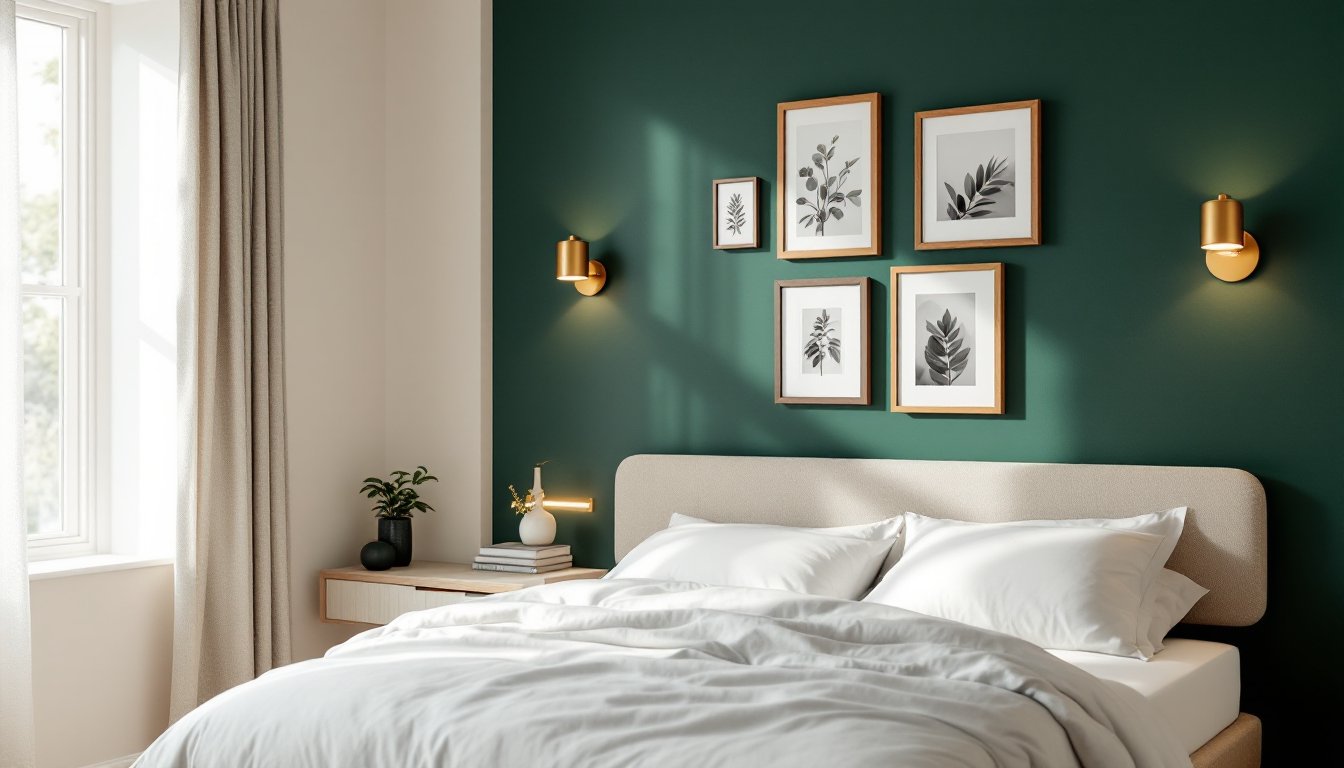
Dark neutrals (charcoal, soft gray, warm taupe) as the base create a mature backdrop without demanding attention. Pair with one accent color: deep navy, forest green, muted burgundy, or warm bronze. Avoid hot neons or pastels, they feel trendy and date quickly. A single accent wall behind the bed or desk works, or let accent colors come through accessories and art.
Paint prep is everything. Surface condition matters more than the paint itself. Sand rough spots with 120-grit sandpaper, fill holes or dents with spackling putty, and prime any stains (water damage, crayon, marker) with white or gray primer before topcoating. Most latex interior paint covers 350–400 square feet per gallon, so measure the wall area before buying. A single coat rarely covers dark or saturated colors: expect two coats and plan accordingly.
For rented rooms or non-permanent options, removable wallpaper or peel-and-stick decals let him personalize without landlord issues. Quality removable wallpaper sticks well and peels cleanly if applied correctly: cheap versions leave residue.
Posters and framed prints add personality. Oversized abstract art, minimalist line drawings, or black-and-white photography feel more mature than band posters plastered haphazardly. A clip frame or aluminum poster frame with glass looks intentional and protects the print. Sites like Homedit feature curated interior design ideas that balance personality with restraint, useful for finding inspiration without veering into cliché.
Keep wall treatments balanced: if three walls are neutral, the accent wall carries the color. If the walls are all one tone, let accessories (pillows, rug, art) introduce variety. Too many competing elements make the space feel chaotic.
Lighting Layers For Mood And Function
Most teen bedrooms rely on a single overhead fixture, a recipe for harsh shadows and eye strain. Layered lighting means he can adjust the mood and brightness for different tasks.
Ambient lighting (the overhead fixture or a ceiling-mounted LED panel) provides baseline brightness. A dimmable LED ceiling fixture or smart bulbs (2700K warm white) let him adjust brightness from bright for cleaning or getting ready to dim for gaming or winding down. This flexibility costs maybe an extra $30–50 compared to a basic fixture, and it’s worth it.
Task lighting at the desk (desk lamp, as mentioned earlier) handles focused work. Position the lamp to the side or behind the monitor to avoid glare on the screen.
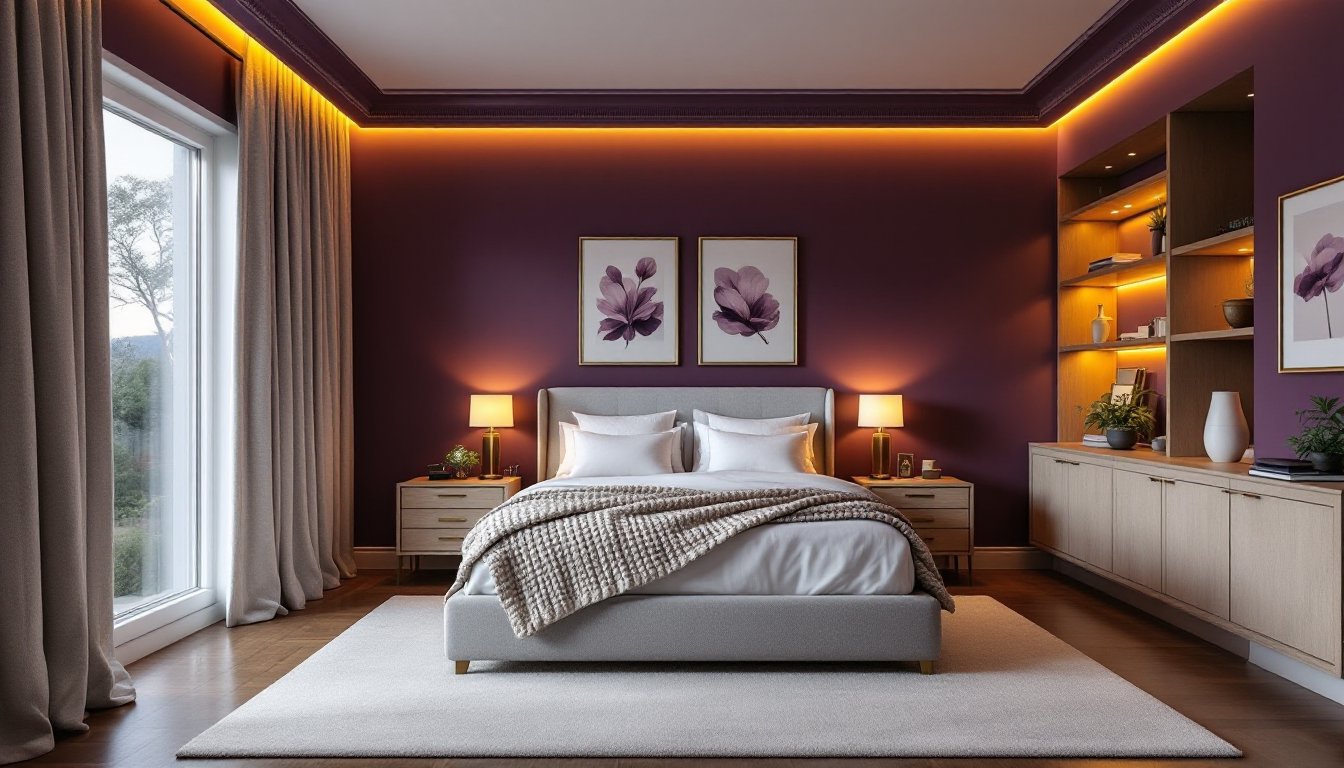
Accent lighting adds mood. A strip of LED tape under a shelf or along the top of a closet (soft white or color-changing) creates ambient glow without clutter. Wall sconces on either side of the bed or near the gaming area offer targeted light without taking up desk space. Cheap LED strips work, but quality ones (warm white, dimmable, adhesive-backed) integrate more cleanly.
Cable management matters with extra lights. Paintable cable covers or raceway run cords neatly along the wall or baseboard instead of leaving them visible and tripping hazards. Tape cords behind furniture when possible.
Avoid blue light at night if he’s sensitive to it, blue suppresses melatonin. Many desks lamps and overhead fixtures come in warm white (2700K) or cool white (4000K+): warm white is better after sunset. Some gaming monitors have blue light filters built in: using them after 9 PM helps sleep quality.
Furniture Picks That Balance Style And Practicality
Furniture sets a tone. Fast-fashion pieces (flimsy particle-board nightstands, hollow-core dressers) wear out and look cheap within a year. This doesn’t mean he needs expensive custom furniture, it means choosing pieces designed to last.
A solid-wood or sturdy plywood bed frame in a simple, clean-lined design (no ornate carvings) feels grown-up and lasts through college and beyond. Metal frames are durable and light. Avoid platform beds if the room’s ceiling is low, they eat visual space. A standard bed frame with a good mattress beats a cheap bed with fancy headboard styling.
Nightstands should have at least one drawer for the phone charger, glasses, books, or medications, clutter on top of the nightstand disrupts the room’s flow. Simple wood or metal designs (24–30 inches tall, 20–24 inches wide) work in most spaces. Avoid oversized statement pieces that dominate the corner.
A dresser with deep drawers holds more than a shelf-based wardrobe. Make sure it’s sturdy and properly anchored to the wall if there are younger siblings or the room sees rough use, dressers tip if pulled over. A 4–6 drawer dresser is standard: pair it with a wall-mounted shelf for display instead of adding more floor furniture.
A comfortable area rug (5×7 or 6×9) defines the room and adds warmth. Place it under the bed and desk to create a cohesive zone. Choose a neutral tone or subtle pattern, bold prints date quickly and make the room feel smaller.
Keep the room open. Just because he has floor space doesn’t mean every inch needs furniture. Leave at least a 3-foot pathway from the door to the back of the room so the space feels navigable, not cramped. Smart furniture placement trumps more stuff.
Conclusion
A well-designed 17-year-old’s bedroom supports his life: gaming, studying, sleeping, socializing. The best spaces balance function with aesthetic restraint, organized without feeling sterile, personalized without clutter. Start with the zones that matter most (gaming, studying, sleeping), sort out storage and lighting, then layer in décor and color. Small choices, a good desk lamp, cable management, floating shelves, and a thoughtful color palette, transform a generic room into a space he’ll actually want to spend time in.